
Pillar 3: Reduce the Load
And now for the toughest thing of all . . .
Let’s face it. Weight loss is quite likely the most difficult part of this course to actually do in a sustainable way. If you are reading this and need to lose some weight, it’s not like you haven’t known it for a while and likely tried several times, with various methods. But with Knee OA, the goal can be less daunting than with many other weight loss goals.
Let’s start with this - it’s not about a bathing suit or even BMI!
Maybe you’ve calorie counted, maybe you’ve exercised until you were literally blue in the face, maybe you’ve keto-d, maybe you’ve juiced, intermittent fasted, south beach’d, etc. Some strategies have worked for you more than others, but for many of us the success has been met by a return of the weight lost as we lose the motivation, the time, or the resources to continue the fight with this most difficult of foes. Our genetics, our society, our habits, and general health sometimes all seem set against us in the fight.

Large amounts of weight loss will probably require more support than this course can give
At this point I want to recognize that this course is being written by a physiotherapist, not an expert in weight loss. While I do know the importance of weight loss to Knee OA, I can not say I am expert in helping you do it. Therefore, the goal of this chapter is to communicate to you the importance of it, and then link you to more expert resources in the actual process of doing it. This is an area where you may need more support than an online course, so those community supports are going to be particularly important for some of you here. Having said that, maybe we can help you lose that first 5 lbs with some simple measures from the Arthritis Society in the next section - and who knows where that might lead?
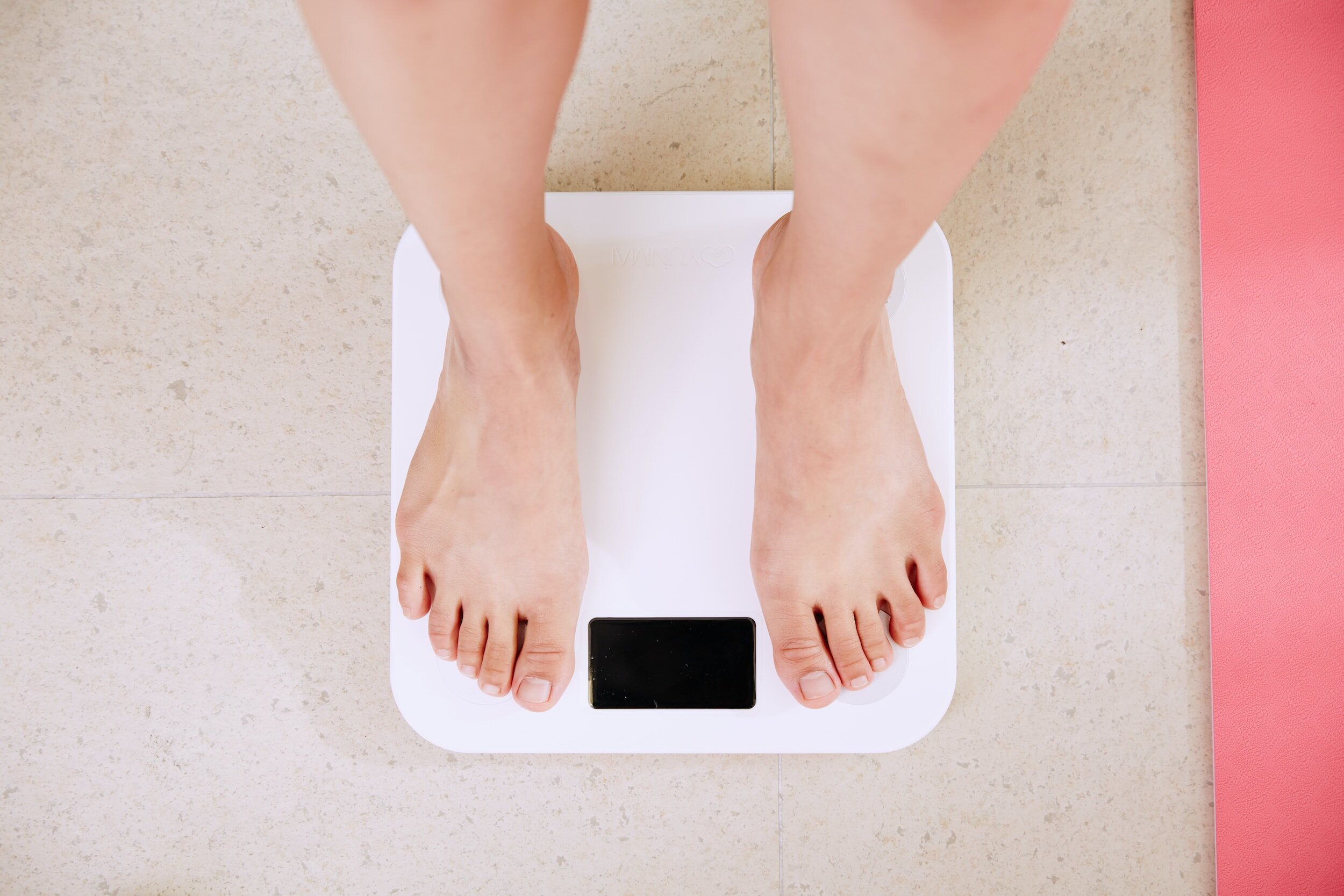
When we look at weight loss from a “Body Mass Index’ perspective, and try to get down to a ‘healthy weight’, our goals are to lose 20, 30, 50 lbs or more! The first month goes ok, but then we often get derailed and the original goal seems insurmountable. Not that these goals are not good or worth pursuing for all sorts of other reasons, but so often the goal is so far away, the success is so far away, that the payoff is too far in the future. We run out of motivation before we are rewarded for the effort.
The good news about weight loss and Knee OA . . .
But the goal doesn’t need to be quite so daunting for Knee OA. The research is clear, people who lose weight reduce their Knee OA pain and increase their quality of life and it often doesn’t take all that much loss to make a difference
With Knee OA, we can re-orient our thinking a bit. We are not trying to get you down to a certain BMI or into a bathing suit. We are trying to take incremental pressure off of your knee.
Here is the good news: It is reported by biomechanical researchers that for every 1 lb of weight loss, the pressure on the knees is reduce by 4lbs. That’s pretty good bang for your buck! If I could invest 1 dollar and make 4, I’d be all over it. Most of us can safely lose 1 lb in a few days. And if we can lose just 5 lbs, we can reduce the pressure on our knees by 20 lbs. Go find something that weighs 20 lbs and pick it up. Imagine taking that force off of your knee joint.
Will 5 lbs of weight loss make a difference to your pain and function?
For some, yes! The only way to find out is to start in that direction and be encouraged that even if you don’t feel a difference right away the pressure is still reducing in your knee by a substantial amount for every 1lb you lose. Maybe it doesn’t make a difference right away, but maybe it makes the difference in having to take less medications over time, or even decreases the likelihood of surgery in time.